
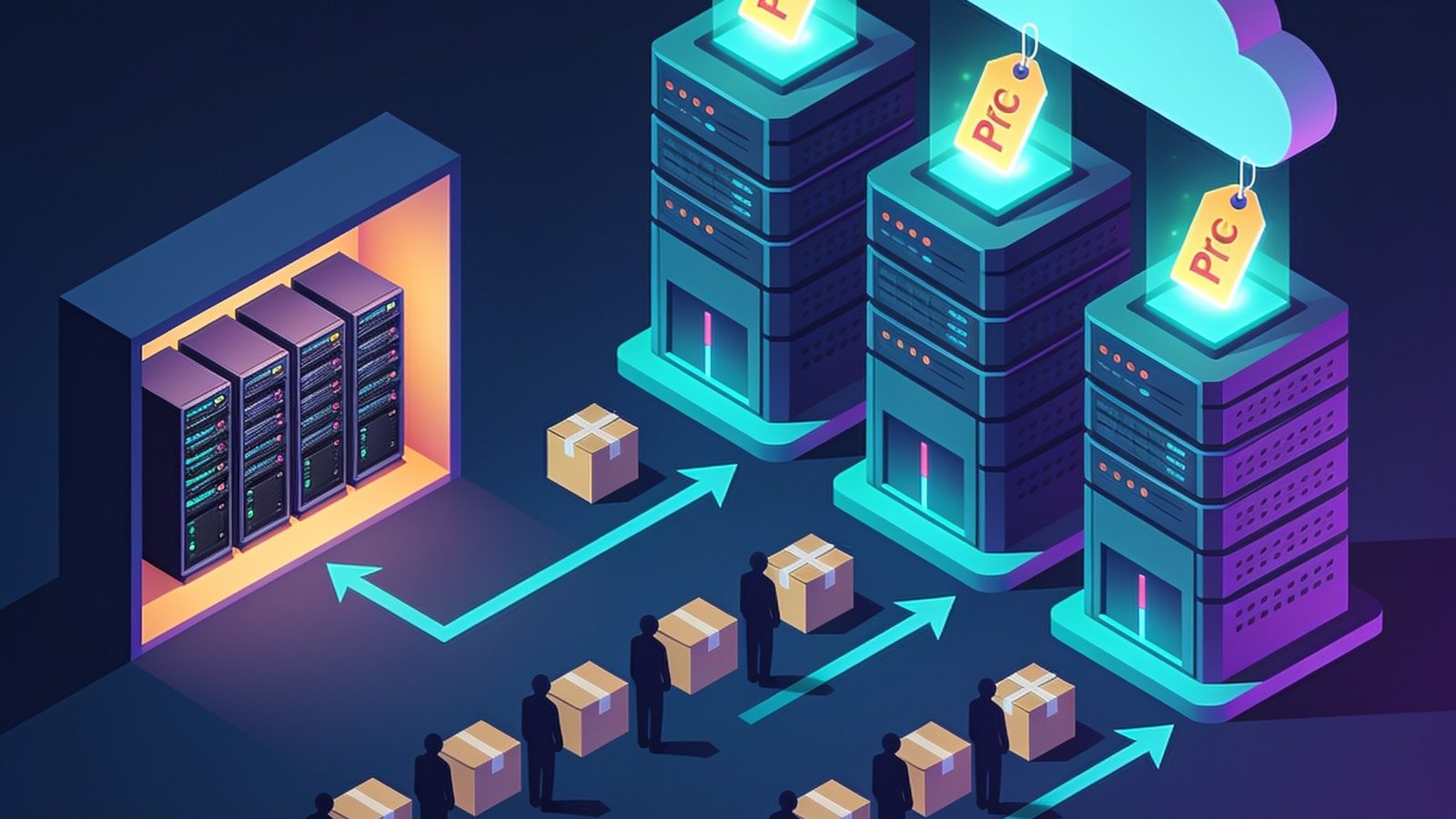
For a solid decade, the strategy was simple: lift, shift, and let the cloud sort it out. That phase is ending. Around 70% of respondents in VMware's Private Cloud Outlook study say they are actively considering cloud repatriation, and roughly 35% have already moved some workloads back onto their own infrastructure. A complementary Broadcom survey of about 1,800 senior IT leaders reported a similar picture: more than two-thirds considering pulling workloads out of public cloud, with over a third already doing it. These are not anecdotal gripes. They are measured, repeatable survey results.
The loudest proof has been public. When 37signals — the company behind Basecamp and HEY — announced its cloud exit in October 2022, it expected to save roughly $7 million over five years by buying its own hardware and eventually deleting its AWS account. Their first-year cloud spend was about $3.2 million. By 2024 the estimate had climbed past $10 million, driven by faster machines and a simpler bill. One company, fewer than a hundred employees, and the numbers held up.
The financial logic was catalogued years earlier. In June 2021, Andreessen Horowitz partners Sarah Wang and Martin Casado published "The Cost of Cloud, a Trillion Dollar Paradox." They found committed cloud spend averaging about 50% of cost of revenue among public software companies, topping out around 80% at one large private firm. Their estimate: roughly $100 billion in lost market value among top public software companies because cloud margins ate into profits. For steady, predictable workloads, rented compute stops being convenient and becomes a tax.
Why does this turn keep happening? The reasons are consistent and unglamorous. Predictable steady-state workloads are often cheaper on owned hardware. Bills become legible when you can forecast them. Data sovereignty and compliance push some data home. Performance improves when you control the stack. And fewer workloads locked into a single provider means fewer locks on the door at all.
But here is the nuance the headlines keep missing. Cloud repatriation is selective, not a wholesale "cloud is dead" claim. Elastic, variable workloads still shine in the public cloud, and for startups the instant capacity is often the difference between shipping and stalling. The winning posture is hybrid: put steady-state infrastructure where it is cheapest and most controllable, and keep the bursty, unpredictable demand where on-demand capacity is an asset. Treat workload placement as a portfolio decision, re-evaluated as costs change.
Calling it a hype wave misses the point. Repatriation survives because the math argues for it — and the math, unlike marketing, is not going back.